Why these questions matter #
The meeting is over, the proposal approved and the start date agreed. What slows the project from here is often what nobody discussed: different understandings of the goal, an unclear decision-maker or an important existing element changed by mistake. Each creates rework that becomes more expensive as the project advances.
Nielsen Norman Group highlights three benefits of stakeholder interviews: understanding stakeholders’ context, identifying the business goals they value and building their support. These questions form the backbone of those interviews. They are also a useful preparation list for founders and managers considering an agency.
Have the following ready before the first meeting:
- Access to analytics for the current website or app.
- Logo files, brand guidelines and existing marketing materials.
- Any user research, customer feedback and examples of support records.
- Information about the technology, CMS and development team.
- Constraints such as deadlines, budget and external dependencies.
1. What do you want to achieve? #
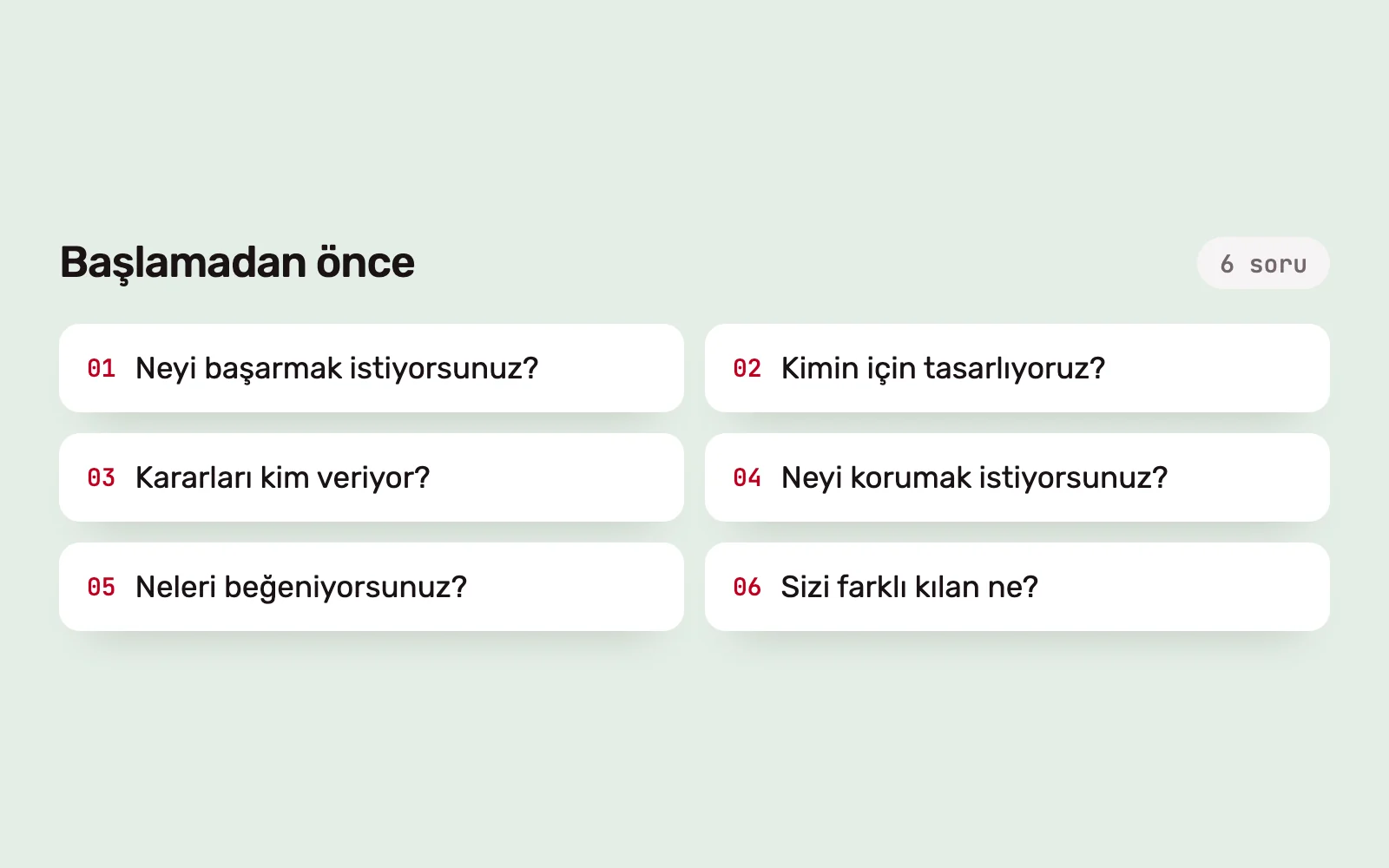
A client may ask only for a new logo. The design team needs to understand why. Does the brand want to look more contemporary, reach a new audience or establish a new identity after a merger? Each answer leads to a different scope and direction.
We recommend expressing the goal as a business outcome: more trial users moving to paid plans, a sales team better able to explain the brand, or fewer support requests. How success will be tracked should also be discussed in the first week.
This question reveals scope too. What starts as a simple logo refresh may become a full identity project as the conversation develops. Discovering that at the outset, rather than halfway through, protects both sides’ plans.
Goals need priorities. If a project aims both to attract new customers and serve existing ones better, design decisions often require a trade-off. Recording which goal comes first makes those choices easier.
2. Whom are we designing for? #
Once the purpose is clear, we need to know whom the work serves. Age, location and occupation are a start, but design needs more: when do people seek this product, how do they solve the problem today, what do they trust when deciding and what holds them back?
Clients often know their audience best, but that knowledge is usually based on personal experience. Where possible, we validate it with a few user interviews or existing data. Even without a research budget, a short conversation with sales and support can reveal a great deal.
In enterprise software and B2B services, the question splits in two. The buyer may not be the daily user. Buyers consider trust, cost and integration; users care about completing their work efficiently. The website often speaks to the first group and the product interface to the second. Naming both audiences makes each screen’s purpose clearer.
3. Who makes the decisions? #
Especially in large organisations, the main contact and final decision-maker may be different people. If the contact approves work without showing it to the final approver, entirely different feedback can arrive late and disrupt both schedule and budget.
- Who gives final approval, and at which stages will they be involved?
- Which other stakeholders need to contribute: marketing, sales, legal or technology?
- Will one person consolidate and relay feedback?
- How often are updates expected, and through which channel?
Some clients prefer to give the brief and wait until delivery; others want to follow progress every week. Knowing the preference early lets us establish a suitable communication schedule.
4. What do you want to keep? #
Before proposing major change, understand what already works. Accidentally removing a colour, product name or familiar flow valued by the client and users can damage trust and brand equity.
The keep list includes technical and legal considerations as well as visuals: the CMS, integrations, high-ranking pages and legal requirements all set boundaries. For a website redesign, listing current URLs and pages that bring search traffic helps prevent traffic loss after launch.
5. What do you like, and why? #
Understanding a client’s taste helps the process. Asking about brands, websites and apps they like is a start. The useful detail is why: simple typography, warm photography or a fast checkout?
Many people find visual preferences hard to describe. Showing a few examples in different directions and discussing reactions is faster than an abstract debate. Disliked examples are just as informative as favourites.
6. What makes you different? #
Knowing where a client stands among companies offering similar products or services determines what the design should emphasise. Who are the competitors, what do they do well or poorly, and why do customers choose you? The answers underpin identity, messaging hierarchy and the opening screen.
There may not be a ready answer. A short competitor review and a few customer interviews are a practical way to find it together.
The six answers shape the proposal itself. Scope, timing and budget become realistic only when goals, decisions and constraints are clear. At Pars Design, we discuss these questions in the first meetings and turn the answers into a short brief both sides can refer to throughout the project.
Sources #
- Stakeholder Interviews 101, Nielsen Norman Group; the purpose and benefits of stakeholder interviews