
Design system audit & setup.
Avoid redesigning every screen from scratch. We bring scattered components and inconsistent screens into a shared design system with practical governance.
Tell us where things stand and what you want to achieve. We will define the scope and next step together.
What this service addresses.
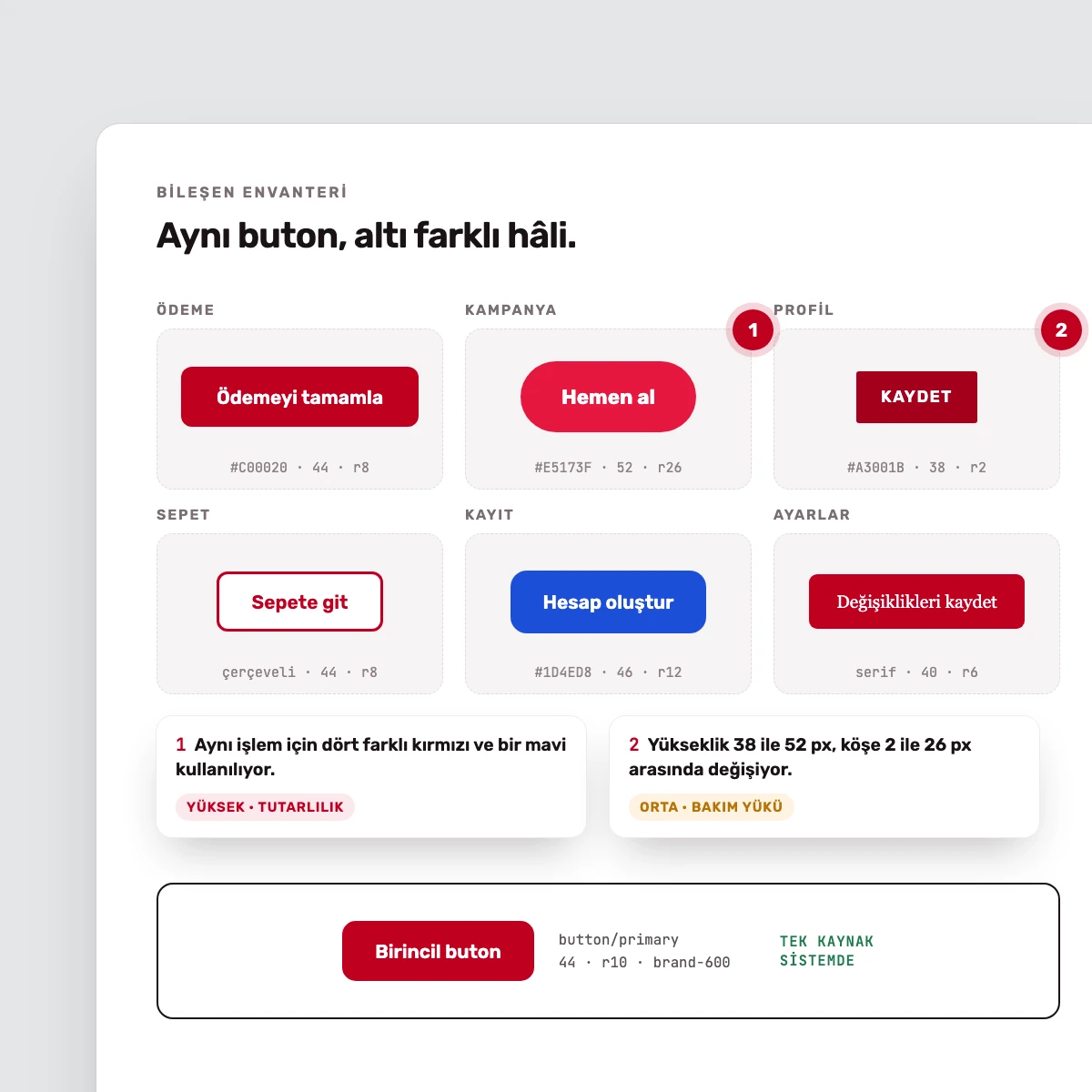
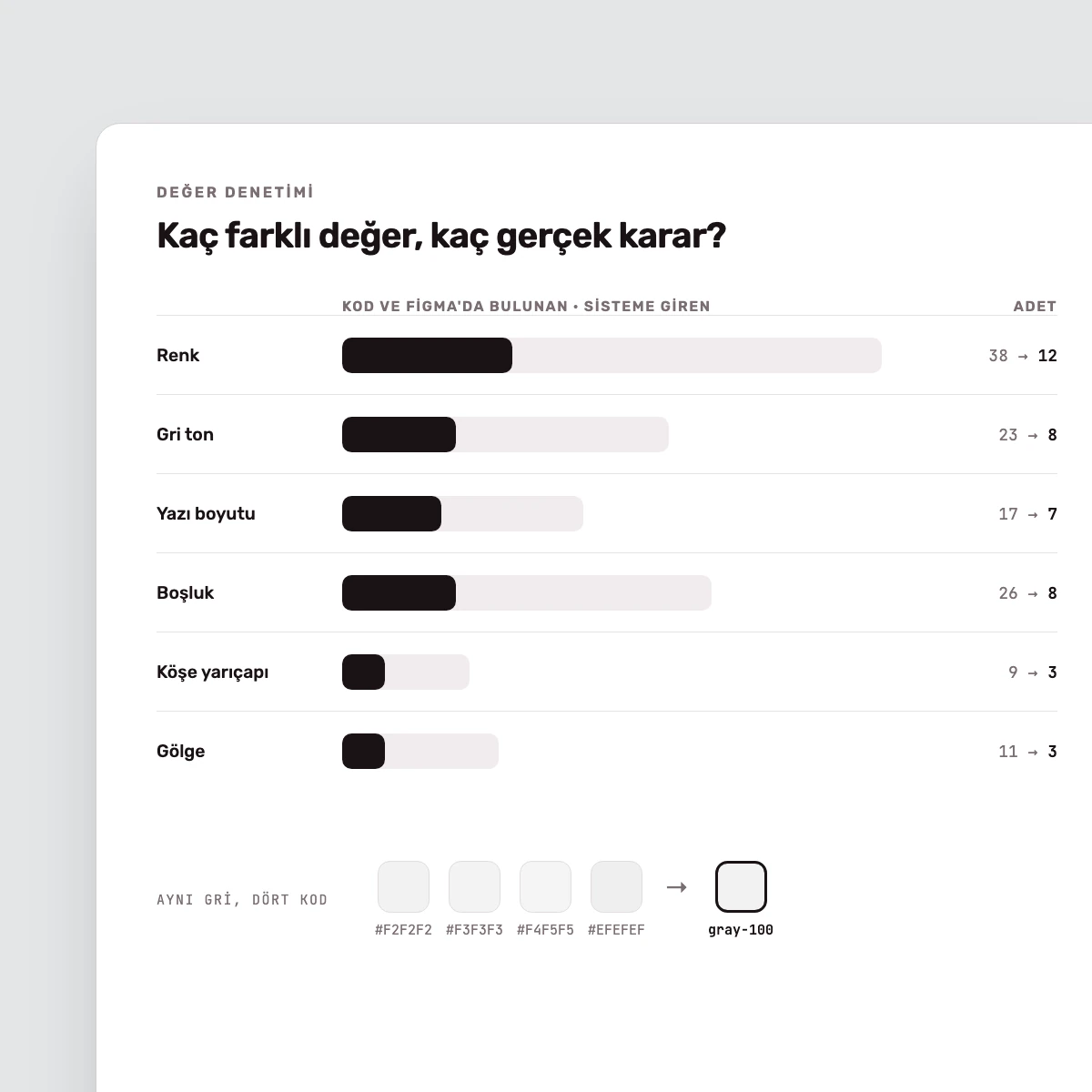
Duplicate components, inconsistent spacing and gaps between design and code slow product development. A design system provides a working structure for reusing shared decisions.
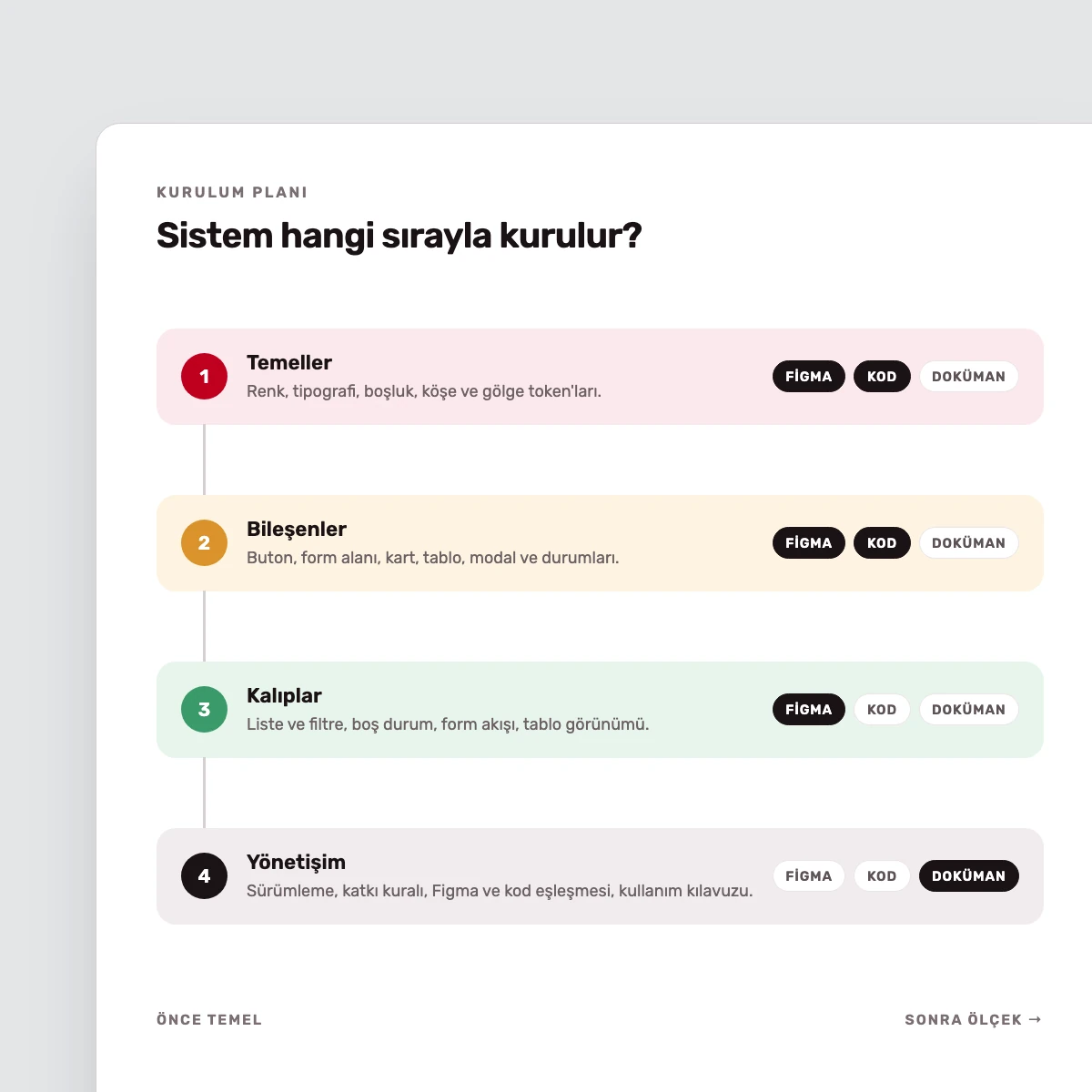
Design and development use the same tokens, components and documentation, reducing repeated work and making consistency easier to maintain.
Who it is for.
- Companies developing interfaces across multiple products or teams
- Teams seeing significant differences between Figma and the live product
- Organisations bringing order to a growing component library
- Product organisations establishing a design system with clear governance
Scope.
The work below is scoped to your needs. Deliverables and responsibilities are agreed in the proposal.
- Existing interface and component inventory
- Token structure
- Figma component library
- Mapping to code components
- Documentation
- Governance and contribution model
Process.
- 01 Inventory We bring existing screens, components, materials or content into one overview, identifying duplication and gaps.
- 02 Architecture We define tokens, component layers, naming and ownership around the product’s actual needs.
- 03 Components We build priority components with their variants and states, then test how well they can be reused.
- 04 Mapping We connect Figma components and design tokens to their equivalents in code.
- 05 Documentation We document usage rules, examples and contribution guidelines in a shared resource teams can find easily.
- 06 Governance We define who makes decisions, how changes are reviewed and how versions are managed.
Deliverables.
Source files, access, third-party licences and ongoing support responsibilities are handed over according to the agreed scope.
- PDFAudit report
- JSONToken set
- FIGFigma library
- WEBComponent documentation
- PDFGovernance guide
Frequently asked questions.
Can you build a Figma-only system?
Yes. If it will not connect to code, we make that limitation clear. The library still needs tokens, consistent naming, states and usage documentation.
Can you work with our existing code components?
Yes. We review code components and their use, then map them to design equivalents. Where needed, we agree which layer is the source of truth.
How many components are included?
The number is determined after the inventory, based on the product family, repetition and priority flows. The proposal also accounts for variants, states, documentation and code mapping.
Who manages the system afterwards?
Governance is part of the project. Ownership, contributions, approvals, versioning and maintenance responsibilities are defined around your existing team structure.
Related services