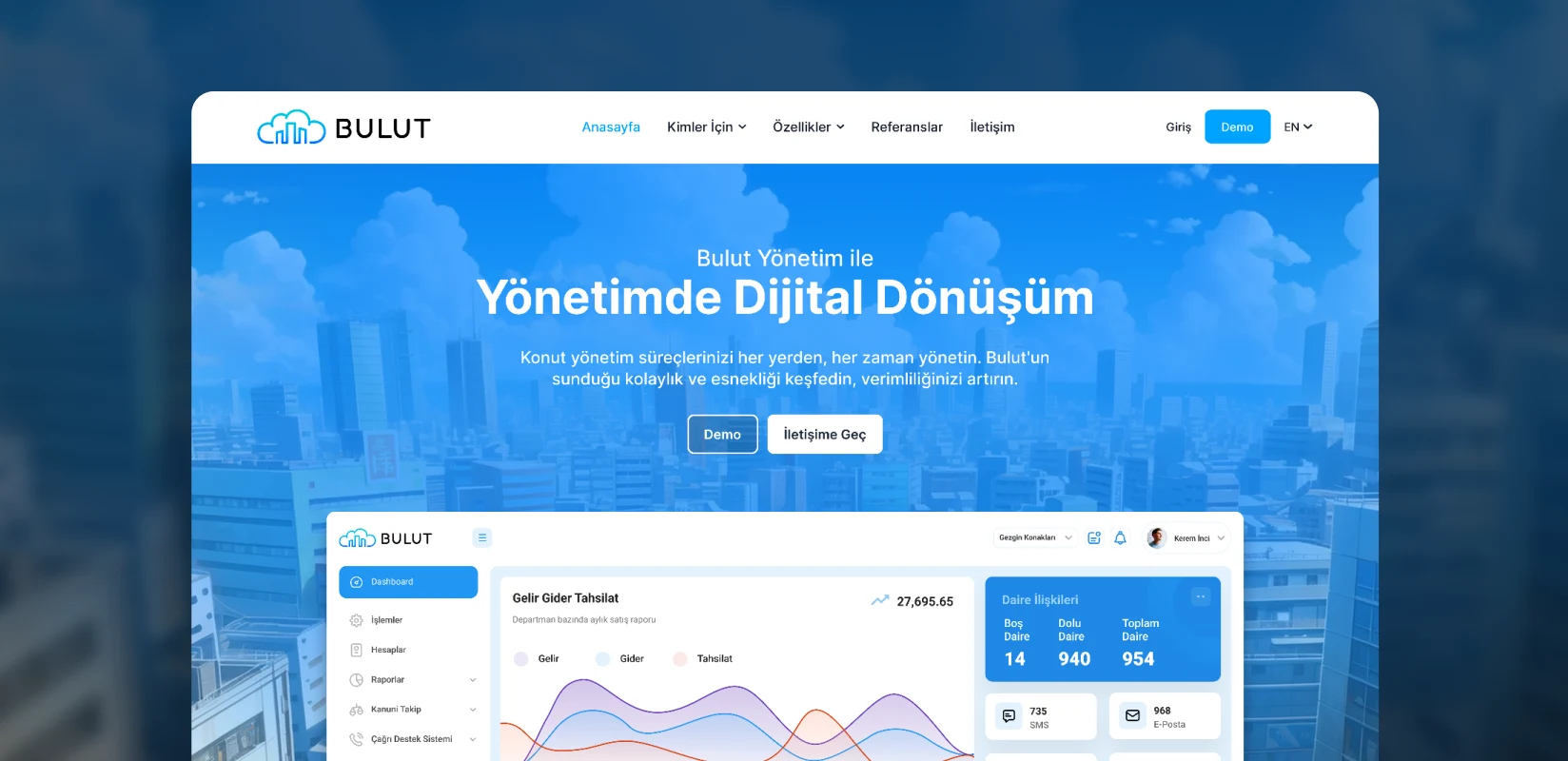
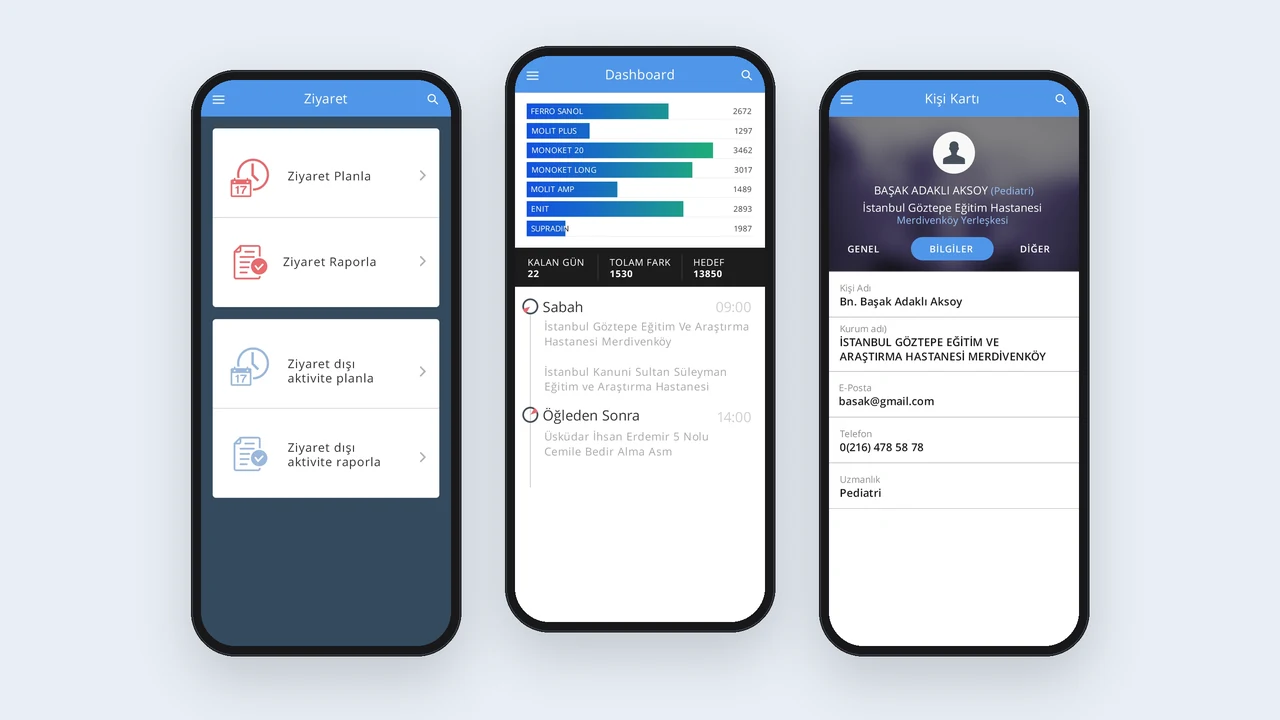
Bulut Pro Mobile App.
Reorganising dense property-management data into a clear mobile experience.
We redesigned Bulut Pro’s mobile app throughout. Payments, balances, support requests, announcements, household and vehicle management came together in a consistent experience with more direct access.
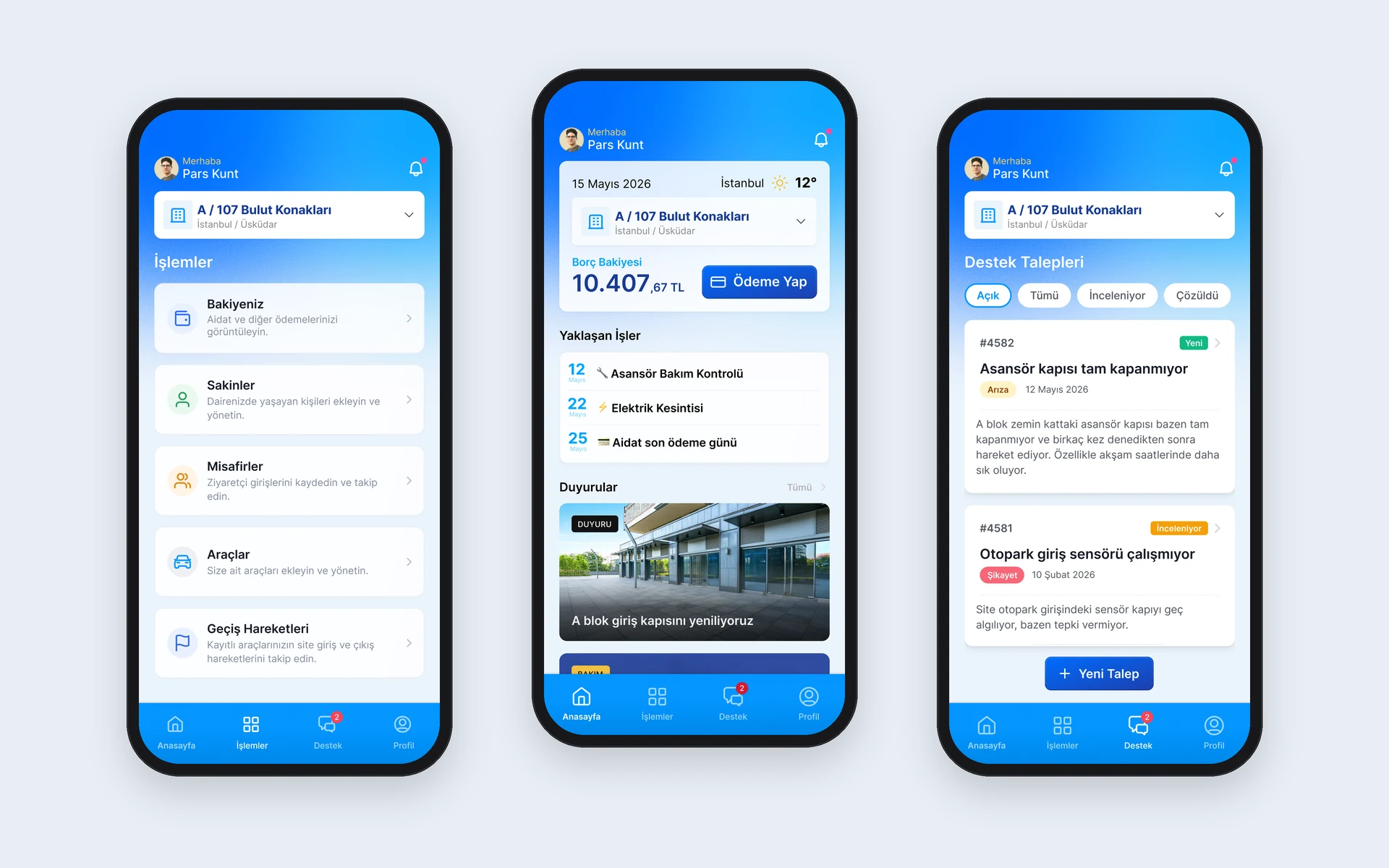
Transactions, home and support requests
Need.
Bulut Pro let residents handle property-management tasks in one app. The existing interface made it hard to move between finances, announcements, services and account actions. Information grouping and priorities did not help people find tasks quickly.
The redesign needed a clearer product architecture for seeing balances, paying, opening support requests, following announcements and managing household members and guest vehicles.
Design approach.
We rebuilt the home screen around everyday information and tasks. Property selection, total balance, upcoming items and quick actions formed an at-a-glance hierarchy and a task-focused starting point.
Financial screens emphasised total amounts owed and credited, with fees, bills and other items in scannable status lists. Payment followed naturally from the balance information.
Support requests were grouped by topic and status so users could follow progress. Notifications, announcements and management updates were distinguished within one visual language.
Household members, guests and vehicles became clear categories under Services. Personal details, settings, agreements, contact and help were collected in the account area.
The blue-and-white interface used cards, status colours, icons and bottom navigation consistently across modules. Spacing, typographic hierarchy and simple data visualisations improved readability on dense screens.
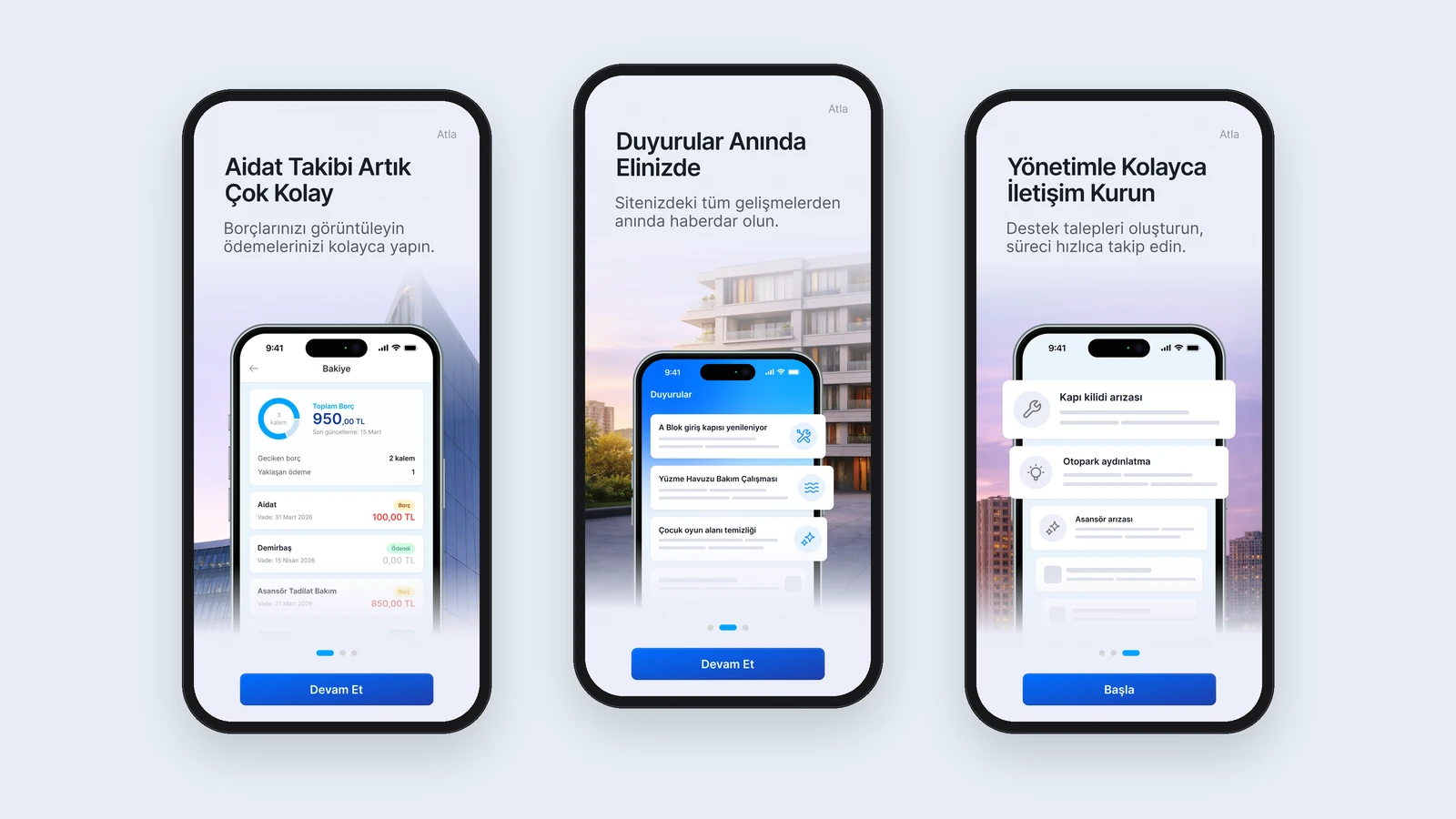
Welcome screens: fee tracking, announcements and contact with management
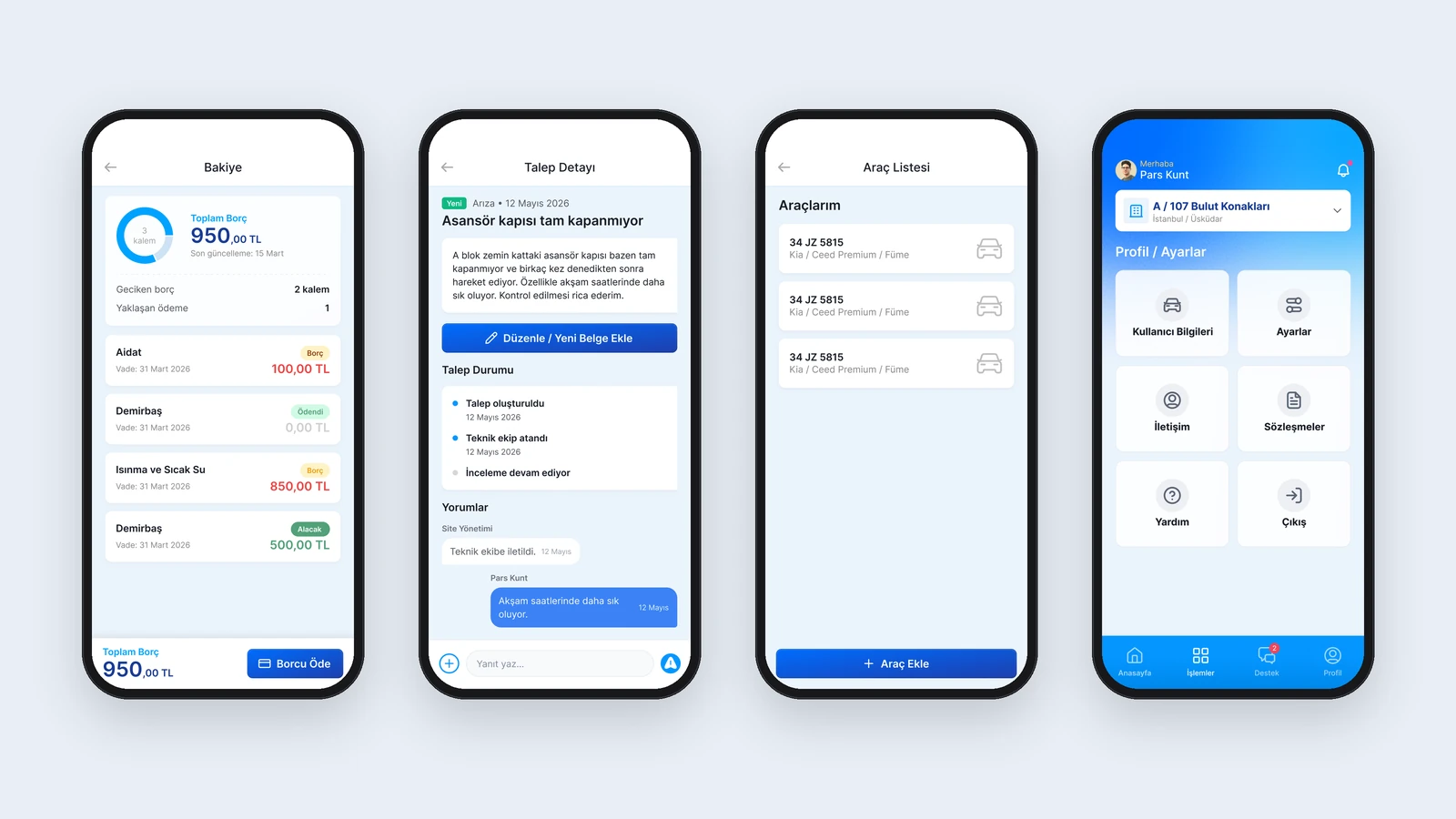
Balance, request details, vehicle list and profile
The work.
The redesign brought scattered property-management tasks into one product language. Users gained more direct access to balances, payments, support requests, announcements and household and guest management.
The work reconsidered information presentation and the relationships between features. Pars Design handled information architecture, user flows and UX/UI; the Bulut Yönetim team retained responsibility for software development.