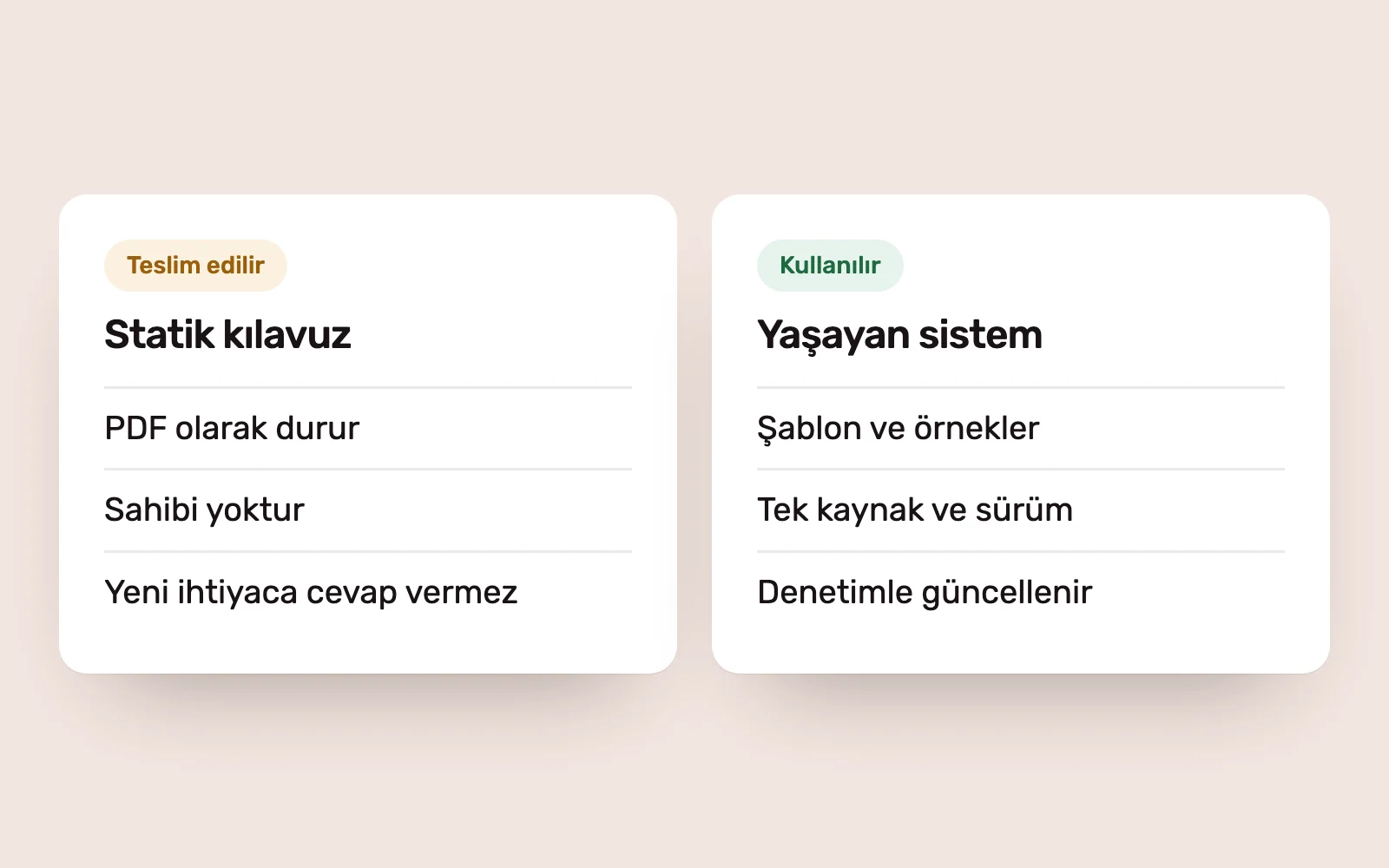
The final day of an identity project often looks the same: a PDF is delivered, everyone is pleased and the file goes into a shared folder. Over the following months, the brand drifts away from it. The cause is not carelessness, but how the guidelines were set up.
Why static guidelines age quickly #
Static guidelines answer the needs of the day they were written. The next day brings a new social format, exhibition stand, app icon or co-branded visual. Whenever the guidelines lack an answer, someone improvises—and that interpretation becomes the next example.
Access is the second problem. If people cannot tell which file is current, they do not open it. Format is the third: rules without ready-to-use files require design work to be repeated for every task.
Decisions beyond logo, colour and typography #
Most guidelines explain logo use, colour codes and typefaces. Daily questions often lie elsewhere.
- Which photography and illustration styles should be used, and which avoided?
- How are headings written, and what tone does the brand use?
- Which grid governs page layout, spacing and alignment?
- What happens when the logo appears beside another brand?
- How do the logo and typography behave in motion?
- Which version works on small screens, app icons and browser tabs?
Without written decisions, each falls to the person doing the work. Guidelines are valuable for the everyday questions they answer, not the detail devoted to the logo.
Connecting identity and digital products #
For most brands, identity is now seen most often on websites and apps, not printed materials. Yet many guidelines cover digital use with only a page of colour codes.
In a living system, brand guidelines and the product design system share a source. Colours become tokens, the type scale matches the interface, and buttons and forms carry the brand’s character. When a guideline colour changes, the process for updating the website and app is clear.
Without that connection, two brands emerge: one in presentations, another on screen. Accessibility belongs here too; test brand colour pairs for sufficient screen contrast from the start. We discuss when interfaces need a separate system in our guide to design systems.
Templates and usage examples #
Rules alone do not make application easy; ready-to-use files do. Presentation and document templates, email signatures, social templates and frequently produced print files are the parts people actually use.
A good template makes misuse harder: text styles are defined, colours come from a palette and image ratios are fixed. Correct and incorrect examples accompany it. People who skip the rules still look at examples.
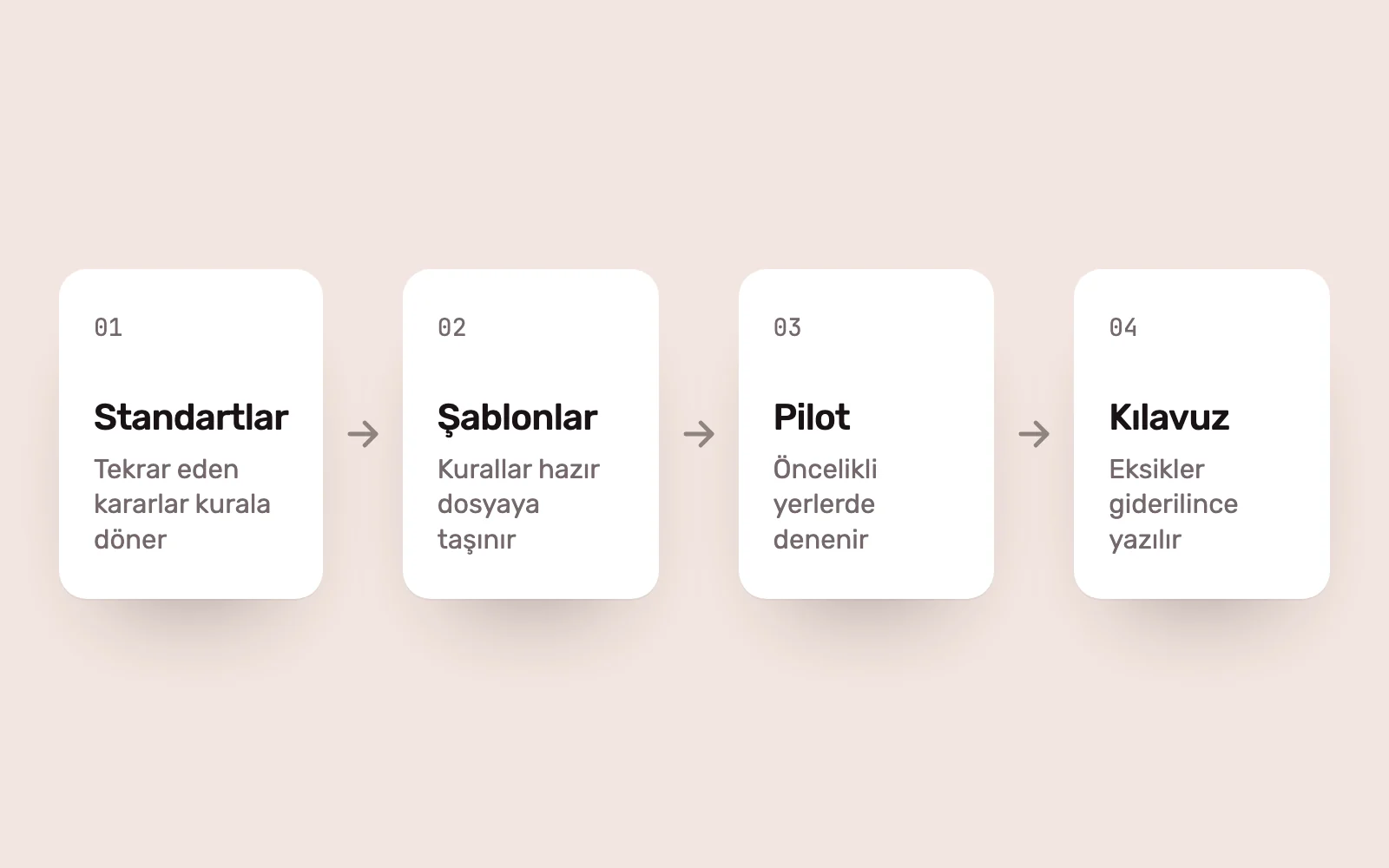
Brand Identity work therefore leaves the written guidelines until last. First we define standards, produce templates and test the system at priority touchpoints. The guide is written after gaps from that pilot are resolved.
File ownership and version control #
A living system needs someone responsible. Ownership answers three questions: where are current files, whom do you ask about an uncovered case, and who approves rule changes?
- One source: logo files, templates and guidelines live at one address. Email attachments are not authoritative copies.
- Versioning: guidelines have a version number and change log, so suppliers know which version they use.
- Access: agencies and suppliers get one link to the current package.
- Decisions: a new solution is added to the guidelines, not left as a one-off.
That final habit keeps the system alive. Each new case adds to the guide so the next person need not ask again. For organisations with several teams and agencies, we take on this ownership through Design Leadership.
Keeping the system current through brand audits #
Even a well-built system drifts. Touchpoints multiply, teams change and some rules prove impractical. Regular reviews make that drift visible.
Brand Audit does this by bringing websites, social media, sales materials and internal documents into one inventory and comparing them with the guidelines. The result separates three things: what to preserve, inconsistencies to correct and places where the guidelines themselves need updating.
The third group matters. If teams repeatedly break a rule, the problem may be the rule. A living system learns from use and adjusts.