
Business software & dashboard audit.
How many steps does the most frequent task take? We review the screens your team or customers use every day, task by task, show where time is lost and where errors happen, and rank the fixes.
Tell us which screens your team uses most and where time is lost. Access is opened once a non-disclosure agreement is signed.
- DURATION
- Usually 2‑3 weeks
- SCOPE
- The tasks and screens you choose
- ROLES
- The roles that use the software
- DELIVERABLE
- Assessment report
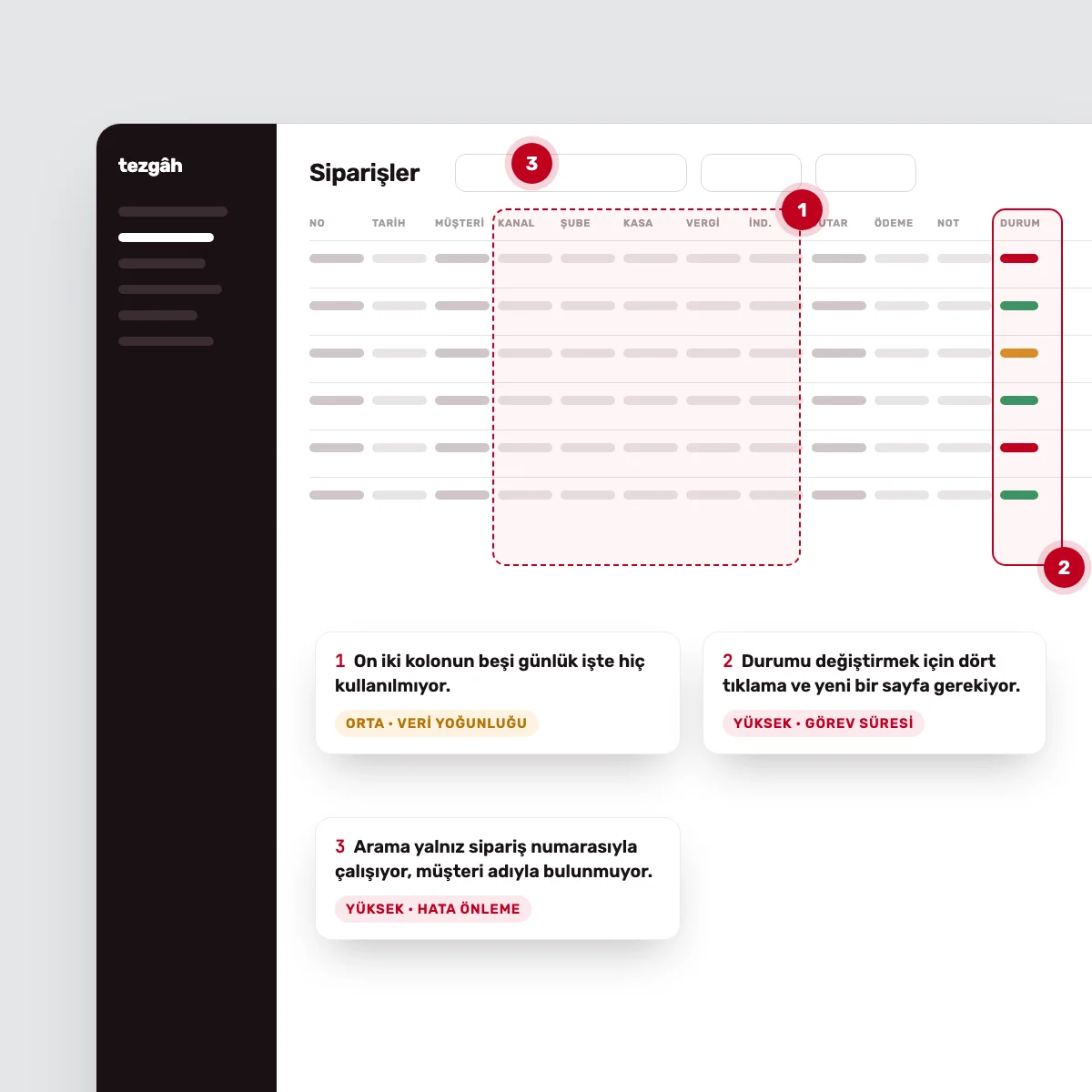
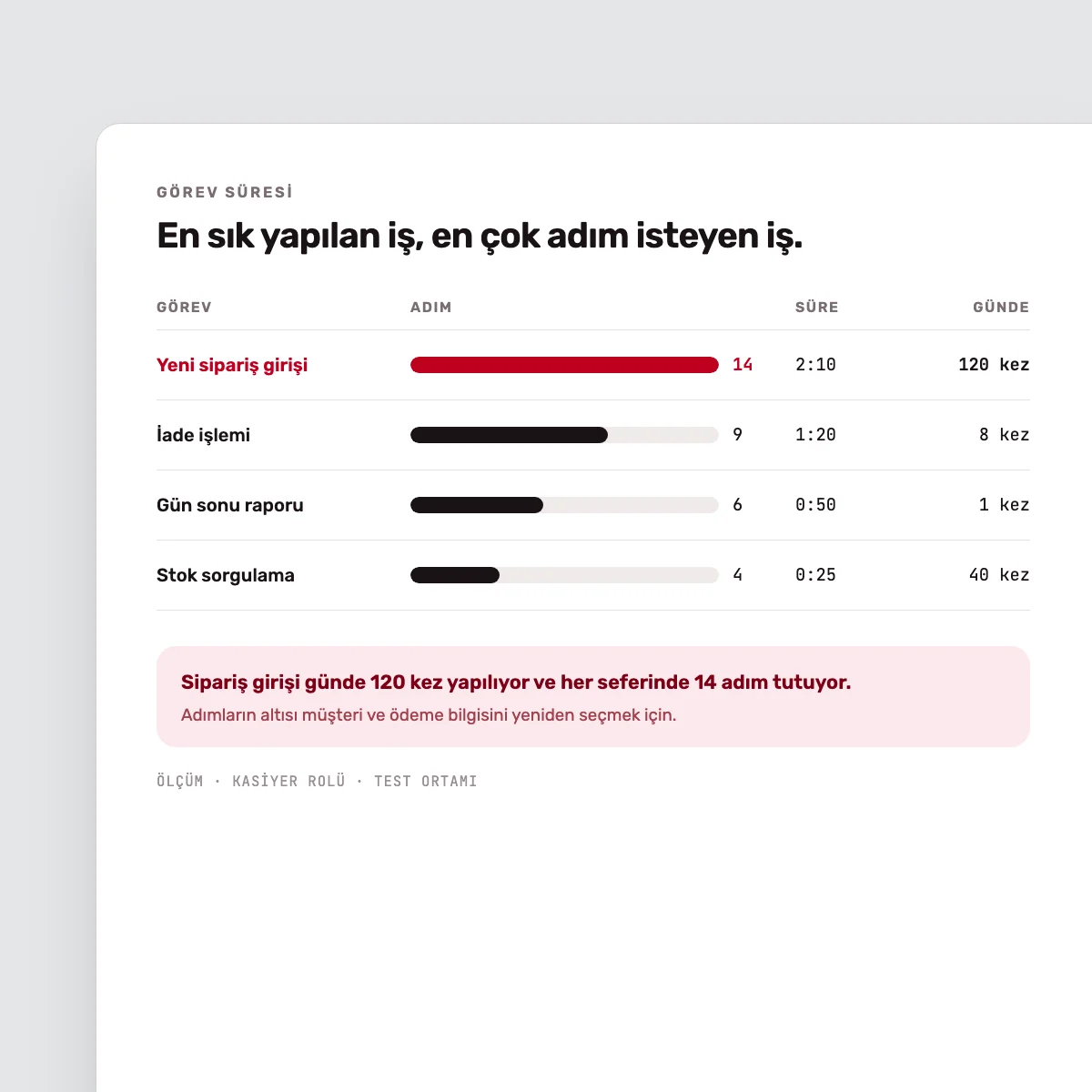
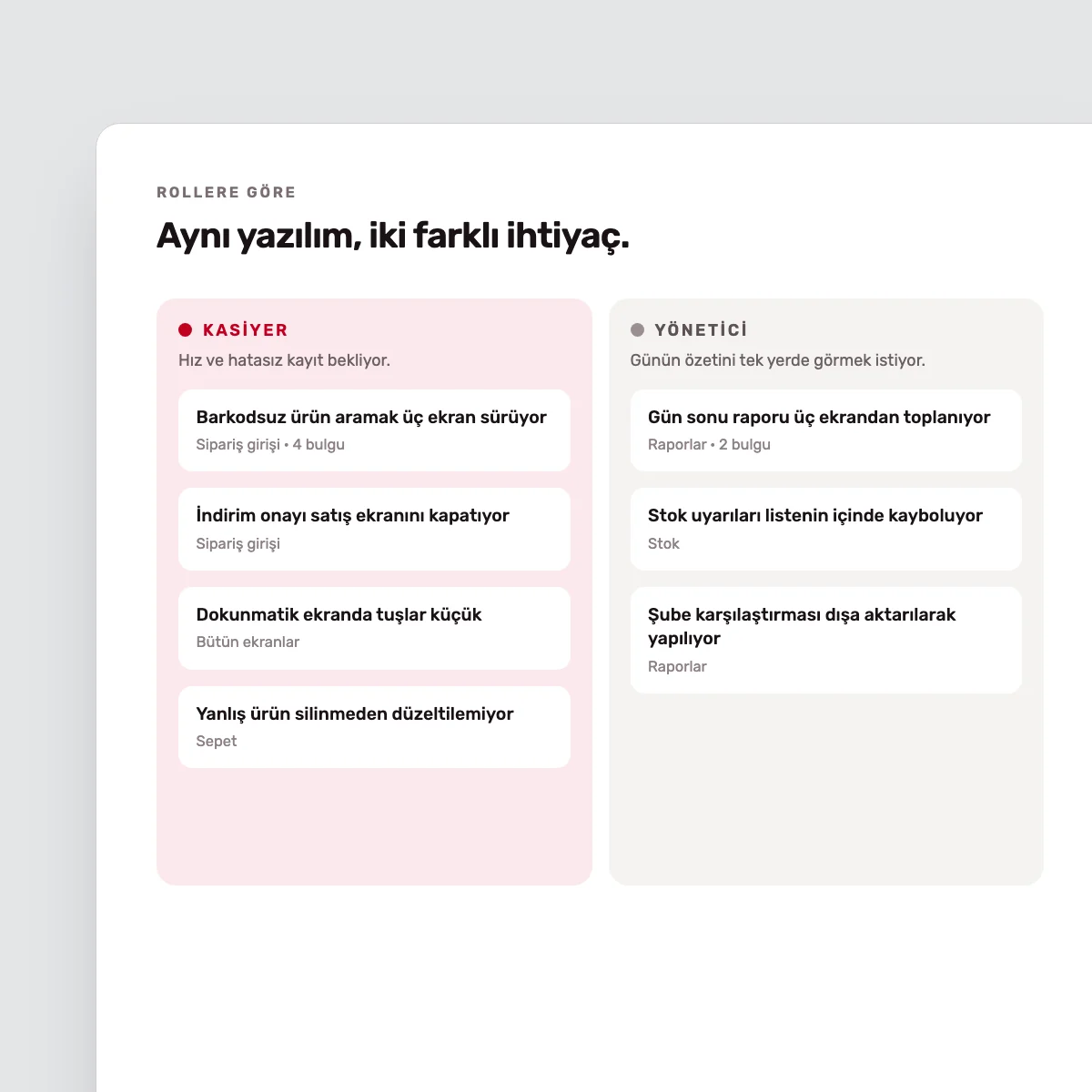
Sample report pages. The brands and figures shown are fictional.
What this service addresses.
Products such as point-of-sale software, admin dashboards and dealer portals tend to grow by adding features. Each new need arrives as another field, column or menu. After a while the most frequent task becomes the one that takes the most clicks, and a new starter needs weeks to learn the screen.
In the audit we walk through the chosen tasks in the order real users do them. We record how many steps and how long each task takes, where mistakes are easy to make and what on the screen is never used. The report shows which screen a redesign should start with.
Who it is for.
- SaaS products receiving usability complaints from customers
- Businesses losing speed on till, order or stock screens
- Organisations where new staff take a long time to learn the software
- Product teams working out where to begin an interface redesign
Scope.
We choose the tasks and roles to review together in the first call. The scope depends on the number of modules.
- Priority task flows
- The screens in those tasks
- Differences by user role
- Step and time measurement per task
- Review of data-heavy screens
- Scope proposal for a redesign
What we look at.
Process.
- 01After the non-disclosure agreement we agree the tasks, roles and form of access.
- 02We walk through the tasks in their real order of use and record each step and its time.
- 03We mark findings on the screens and note their effect on the work, task by task.
- 04We group findings that share a root cause and set screen priorities for a redesign.
- 05We go through the report with your product and engineering teams.
Deliverables.
The report is delivered as a PDF and stays with you. Recommendations are written clearly enough for your team to turn into tasks.
- DELIVERABLEAssessment report
- DELIVERABLEStep and time table per task
- DELIVERABLEAnnotated screenshots
- DELIVERABLETask-based priority matrix
- DELIVERABLEScope proposal for a redesign
Optional add-ons.
Not included in the package. Added during scoping when needed.
Technical experience
Loading times, accessibility and behaviour across screen widths are measured and reported as the user experiences them. Code review, security testing and infrastructure audits are outside this work.
User sessions
We run task-based sessions with people who use the software every day. Observations are added next to the related findings, and the report marks which conclusions come from users.
If you would rather look at a single task first, a focus audit may be enough. It covers that task only.
After the audit.
The report stands on its own. Your team can act on it, or we can take the work on through the services listed here.
Frequently asked questions.
How do you access the software?
Preferably through a user account in a test environment. Without one, we work through screen-sharing sessions or a read-only account. The form of access and confidentiality terms are agreed in writing before work begins.
Do you review code and infrastructure?
No. We look at what users experience on screen. Code quality, security and infrastructure are outside this work.
Do you review products tied to hardware, such as point-of-sale software?
Yes. For products used with a touchscreen, barcode scanner or printer, we review on the real device where possible, or otherwise from recordings of use.
We have our own engineering team. Can they act on the report?
Yes. Findings are written per screen and task, so your team can turn them into tickets directly. The report describes the screen as it is today and is not concerned with who built it.